
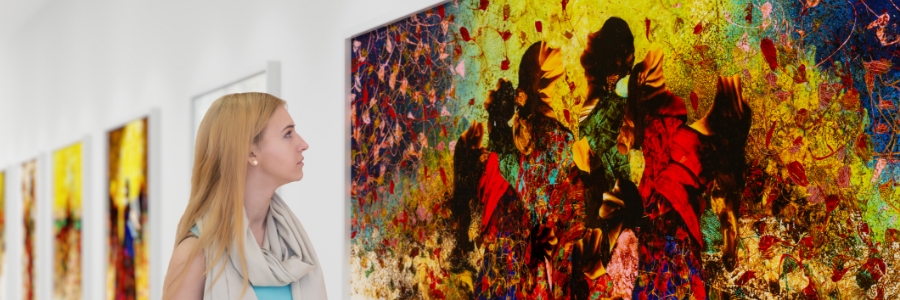
For generations, the global art world revolved almost entirely around a small number of influential Western cultural hubs, particularly London, Paris, and New York. Leading international galleries in California and Europe set the patterns for what was considered valuable, while major commercial events such as Art Basel held a tight grip on the art market. That rigid centralization is finally giving way. Today, international exhibitions increasingly feature emerging artists from the Global South, marking a historic rebalancing of creative influence.
The term Global South refers to societies shaped by colonial histories and unequal global power relations, though its definition is constantly evolving to include vibrant diasporic communities worldwide. The artists and cultural movements emerging from these societies are reshaping contemporary art by challenging whose histories are preserved, whose perspectives are centered, and how artistic value is determined.
Rather than waiting for approval from legacy institutions, creative communities across the region are building their own infrastructure. Regional initiatives have proven that world-class art events do not need a Western address to thrive.
Consider Art Dubai, an international fair that has helped expand global art narratives beyond traditional Western frameworks. Unlike standard art fairs that often prioritize Western mega-galleries over local talent, 65% of Art Dubai’s featured galleries were from the Global South in 2023. That edition attracted 34,000 visitors and generated $38.9 million for the local economy, demonstrating the immense commercial demand for non-Western art. The fair has long been ahead of the curve; its Marker section highlighted underrepresented geographies such as Indonesia, West Africa, and Latin America from 2011 to 2016. It launched a dedicated Digital section in 2022, and runs the A.R.M. Holding Children’s Programme, which reaches 15,000 students annually through arts education.
Digital innovation and modern platforms are also bridging these geographic divides in a dynamic new format. The online platform SOUTH SOUTH launched its inaugural event, SOUTH SOUTH VEZA, in 2021, showcasing 56 galleries from 30 countries. SOUTH SOUTH facilitated collaborations among a diverse group of gallerists while supporting nonprofits such as RAW Material Company in Dakar, Senegal.
Major media outlets like The Art Newspaper, along with academic publishers like Harvard University Press and press networks in Cambridge, are taking account of these shifts. Scholars frequently publish new books, research essays, and written articles to document how these developments are contributing to a richer global discourse. Panel talks and research projects held around the world explore what it means to foster genuine cultural exchange, making sure platforms stay up to date while highlighting Black, indigenous, and regional voices who were once kept on the margins.
Contemporary art from the Global South integrates indigenous and vernacular epistemologies into high-art spaces, placing the work in its full cultural context. This approach offers a refreshing counterweight to sterile, white-cube aesthetics. Artists from these regions frequently blend local craft traditions with contemporary media, turning everyday materials, performance traditions, and deep historical roots into bold visual languages.
Rather than retreating into pure abstraction, many creators use their work to address the impacts of globalization through the lens of local realities. These artworks explore themes of colonial violence, environmental degradation, and social inequality. The work is grounded in local struggles against capitalism and imperialism, emphasizing collective identity and the trauma of colonization.
At the same time, contemporary art from the Global South addresses universal issues such as migration and environmental justice. Viewers find deep emotional truth in these canvases because they bridge personal experience with global reality, offering new ways to view the human condition.
Acquiring an original painting or sculpture from an emerging artist in an overlooked region offers collectors the chance to discover exceptional talent while helping broaden the stories and perspectives represented in the global art world. Smart collectors choose to look where mainstream galleries have failed to look, discovering extraordinary talent at the heart of new creative movements before the rest of the market catches up.
When you purchase art through Borderless Canvas, your provide direct financial support to the creator and their community. A single purchase of original art can pay an artist a fair, life-changing income, fund a local studio space for years, or pay for medical care and education in a developing area. Direct financial support gives these brilliant creators the freedom to stay home, practice their craft, and build sustainable careers on their own terms.
The global art conversation is growing richer because these voices are finally being heard. People who are moved by the stories behind the canvas can now promote systemic change while building a world-class collection. By expanding access for collectors and providing a trusted space for undiscovered talent, we are building a fairer, more connected art economy where every transaction creates lasting, meaningful connections.
Explore the curated collection at Borderless Canvas to discover original art from the Global South and directly support artists by helping bring their work to a wider audience.