
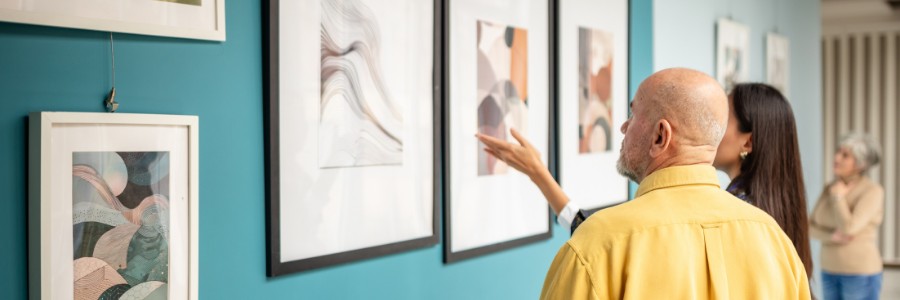
The term “African art” encompasses a far broader and more diverse landscape than one might initially assume. Across a continent of more than 50 countries, artists work in radically different traditions, environments, and mediums. A sculptor in Ghana, a painter in Nigeria, and a mixed-media artist in South Africa may have very little in common beyond geography.
For collectors, that variety is precisely what makes the field worth exploring. Contemporary African art offers distinctive artistic voices, connections to histories and cultures that have often been underrepresented in Western collections, and an increasingly visible place in the global art market. Major museums are adding African artists to their collections, dedicated auctions have expanded, and galleries are bringing more of this work to international audiences.
But why collectors should care about art from Africa is not simply a question of market momentum. The strongest reason to collect remains the same as it is for any art: because the work moves you, challenges you, and gives you something worth returning to.
One of the first steps in collecting African art is moving beyond the idea of an “African aesthetic.”
Africa is home to a rich tapestry of communities, languages, and artistic traditions. Its art includes centuries-old cultural objects alongside experimental contemporary art created in rapidly changing cities. Artists work with oil and acrylic paint, textiles, photography, found materials, metal, wood, ceramics, digital media, and countless combinations of these mediums.
Their subject matter is equally varied. Contemporary artists may explore migration, family, political change, environmental issues, spirituality, urban life, colonial history, gender, memory, or personal identity. Others may focus principally on form, color, material, or the everyday experiences around them.
Ghanaian artist El Anatsui, for example, is known internationally for transforming materials such as metal and bottle caps into large sculptural works. His practice shows how an artist can combine material experimentation, historical references, and local and global ideas without fitting neatly into a single definition of African art. Widely regarded as one of the most important artists from Africa, his works have been offered at auction with estimates reaching seven figures.
For a collector, the lesson is straightforward: explore artists individually. Country, generation, medium, and artistic intent often tell you much more than the continental label alone.
Art can introduce collectors to experiences beyond their own without becoming a history lesson hanging on a wall.
Artists across Africa and the African diaspora address questions that are both locally specific and widely recognizable: What does home mean? How does a city change? What gets remembered or forgotten? How do traditions survive migration? How does a younger generation negotiate inherited expectations?
This gives many works profound cultural significance, but collectors should avoid assuming every African artist is making art about Africa. Artists are individuals, not representatives responsible for explaining entire African cultures.
That distinction makes looking closely more rewarding. Learning why an artist chooses a particular subject or material can deepen your understanding of the artwork without reducing it to geography.
Over time, an art collection can become a record of those encounters. The paintings, prints, sculptures, and drawings you choose may reflect your changing aesthetic preferences, interests, travels, heritage, or ideas about the world.
Interest in modern and contemporary African artists is no longer confined to specialist circles.
Sotheby’s has held dedicated Modern & Contemporary African Art sales featuring artists from countries across the continent, while its secondary-market listings include established and emerging artists working in painting, photography, collage, installation, and sculpture.
Major museums are expanding their collections as well. The Smithsonian Institution’s National Museum of African Art is set to unveil its latest exhibit, New & Now: A Decade Building the National Collection of African Art, which is devoted to works acquired during the 2010s and the new voices those acquisitions brought to its collection. The Ackland Art Museum similarly organized a 2026 exhibition around recent acquisitions from across the continent.
Institutional recognition — through exhibitions, acquisitions, and auction activity — plays a key role in building an artist’s profile and can drive up prices. However, while a handful of African artists command significant sums at major auction houses, many remain accessible and affordable. For new collectors, this is worth keeping in mind: growing interest in African art doesn’t mean it’s out of reach, and not every purchase needs to be viewed as a financial investment.
Market growth can make art collecting sound like stock picking. That is usually the wrong place to begin.
No one can reliably guarantee that a particular artist’s work will increase in value. Trends change, careers develop unpredictably, and auction records represent only one portion of the broader art market.
A better question is: Would you still want this work if its resale value never changed?
For many collectors, the answer comes from an immediate emotional response. A painting may create a sense of peace or become a source of strength. A portrait may remind someone of family. An abstract work may become more intriguing every time the collector passes it.
Those responses can also develop gradually. Something that first catches your attention because of its beauty may become deeply personal as you learn more about the artist or live with the work over time.
For Black collectors and people across the African diaspora, some works may create connections with heritage and identity. Others may collect simply because a particular artist’s ideas or visual language resonates with them. Neither connection is more legitimate than the other.
Collecting art is personal precisely because you get to decide what deserves a place in your life.
Collectors have always influenced which artists gain visibility.
The history of Black art offers useful examples. The Harlem Renaissance flourished during the 1920s and helped bring greater attention to Black artistic and cultural expression. In Chicago, AfriCOBRA emerged in 1968 around ideas of Black identity, self-determination, and community.
Collectors and galleries also played an important role in preserving that work. The Black-owned Barnett-Aden Gallery opened in Washington, DC, in 1943 and provided exhibition opportunities for underrepresented artists. Arturo Schomburg’s extensive collection of material documenting Black life and culture was acquired by the New York Public Library in 1926 with support from the Carnegie Corporation, eventually helping form today’s Schomburg Center for Research in Black Culture.
The Kinsey Collection offers a more recent example of how collecting can develop into cultural preservation and public education: the family’s collection of African American art and historical material has been exhibited at museums and cultural institutions across the country.
These examples concern African American history rather than contemporary art made in Africa, but the wider principle applies: collectors, Black-owned galleries, independent galleries, and cultural institutions can create visibility where the mainstream market has historically left gaps.
Buying work by living African artists can contribute directly to that ecosystem.
You do not need a museum budget or specialist-level knowledge to begin.
Start by looking widely. Visit galleries, attend exhibitions, explore museum collections, follow artists online, and read about the ideas behind their work. Pay attention to which themes, colors, materials, or approaches you consistently respond to. That process sharpens your eye before you spend money.
If original paintings are beyond your current budget, consider prints, limited editions, smaller works, or drawings. These can provide genuine entry points into an artist’s practice at lower prices. Work by emerging artists can also make it possible to build a meaningful collection while exploring artists beyond the most established names.
Next, build relationships. Good galleries can explain an artist’s background, introduce you to different bodies of work, and provide information that online browsing alone may not reveal. Relationships with galleries, artists, curators, and other collectors can gradually increase your confidence and help you make more informed decisions.
Finally, keep records. For each piece in your collection, note the artist’s name, title, medium, dimensions, purchase date, price, and seller. Include any exhibition history or provenance information, and save all receipts and authenticity documents. Good records are invaluable for insurance, resale, estate planning, and preserving the work’s history.
For older cultural objects, provenance deserves additional attention. Historical or ceremonial works with unclear origins can raise legal and ethical issues that usually do not apply when purchasing a new piece directly from a living artist or their gallery.
A common obstacle for someone who wants to start collecting art from Africa is knowing where to begin. The continent has an enormous creative landscape, but collectors in other parts of the world may encounter only a small group of internationally famous names.
Borderless Canvas helps close that gap by giving collectors a place to explore contemporary artists, discover their work, and understand more about the ideas and experiences behind each piece. That context makes it easier to build a collection around genuine personal connection rather than simply following market trends or buying based on appearance alone.
Just as importantly, collecting through Borderless Canvas allows buyers to support the artists behind the work. By creating visibility for contemporary African artists and connecting them with collectors who value their practice, the platform helps more creative voices reach audiences beyond their immediate markets. A purchase can therefore do more than expand your collection; it can contribute to an artist’s career, strengthen their exposure, and support a broader, more inclusive art community.
Ready to discover art that speaks to you? Browse Borderless Canvas to explore original works by contemporary African artists, learn the stories behind their practice, and find a piece that adds meaning to your collection while directly supporting the creators behind it. Contact us today.