
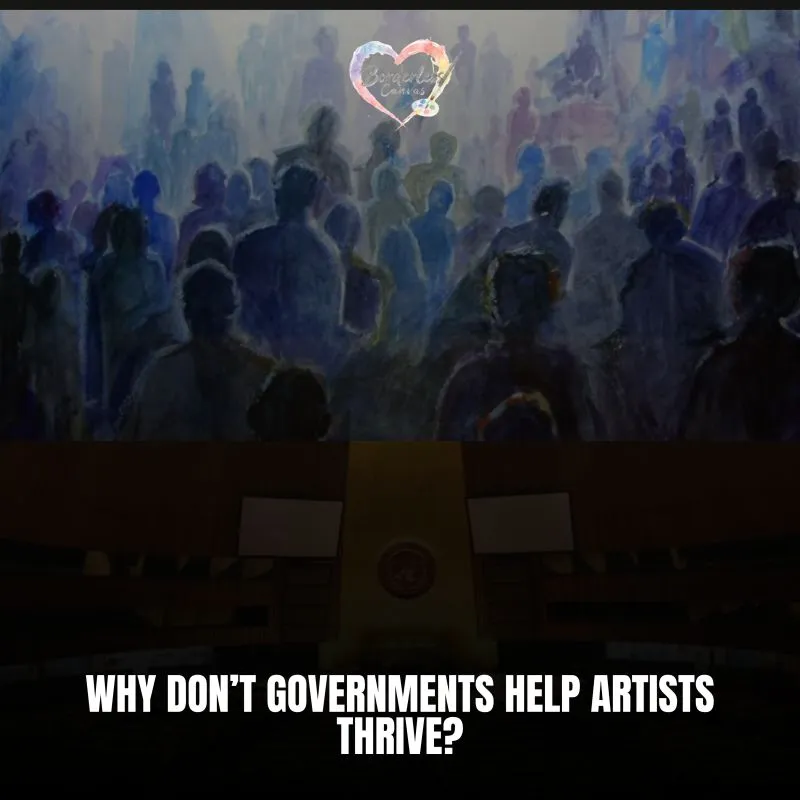
Let’s ask the uncomfortable question:
If talent is universal, why isn’t opportunity?
In countries like the Philippines, there’s no shortage of gifted artists, musicians, writers, and creatives.
What’s missing is the infrastructure—and more importantly, the governmental will—to help those people turn their skills into income.
So here’s the real question: What’s stopping governments from working with Western entrepreneurs to fix this?
We’ve been to the provinces.
We’ve spoken with artists painting by flashlight, using the back of cereal boxes as their canvas.
And still, their talent is undeniable.
But the systems around them?
No access to formal art education
No grants, subsidies, or municipal platforms
No distribution networks to sell or export their work
No legal framework to protect their art from exploitation
They’re not just invisible to the world—they’re invisible to their own local government.
At Borderless Canvas, we’re not asking for handouts.
We’re offering partnership.
Western businesses like ours are ready to:
We’re ready to do the work. But we need governments that see art as economy, not charity.
Bureaucracy & Corruption
Government partnerships often require navigating opaque systems filled with red tape and unofficial “fees.” Most entrepreneurs simply give up.
Short-Term Thinking
Many local governments focus on exportable commodities (like agriculture or BPO services) because the ROI is immediate. Art is treated as a luxury, not a development asset.
Lack of Trust in Foreign Ventures There’s often skepticism toward Westerners “coming to help,” especially after decades of exploitative history. Even honest intentions are questioned.
No Clear Department Ownership Is it culture? Is it commerce? Is it tourism? In many governments, no one knows who owns the responsibility of supporting artists.
Let’s stop pretending this isn’t possible. It’s already happening in countries like Mexico, Colombia, and Kenya, where local and foreign ecosystems are collaborating to build new art economies.
The talent is already there. The work ethic is already there. What’s missing is belief, vision, and leadership.