
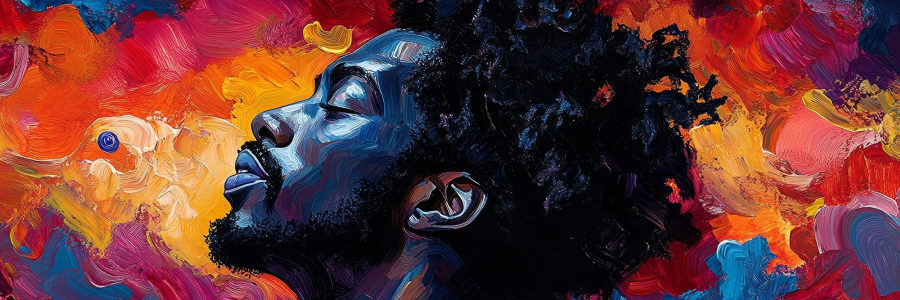
For decades, the Western world treated African art like an artifact instead of a living force. Museums collected masks, carvings, ritual objects, and ceremonial sculpture, then sealed them behind glass as if African culture belonged only to history.
But that narrative has finally been dismantled.
Contemporary African art is now one of the most important conversations in the global art market. Collectors in New York, London, Paris, Cape Town, Lagos, Ghana, Kenya, and beyond are paying closer attention to contemporary African artists who are reshaping painting, photography, sculpture, mixed media, and installation work.
The shift did not happen overnight. Africa’s contemporary art scene was built through movements, moments, and unyielding artistic vision. Many African artists created under colonial rule, through liberation movements, during political and social changes, and within economies that gave them little institutional support. Their work reflects pressure, survival, memory, resistance, and reinvention.
Now, the market is finally catching up.
To understand contemporary African art, you have to start with African modernism.
African modernists were not simply copying Western or European modern art movements. They were taking the tools of modernism and using them to answer African questions. What does freedom look like after colonial rule? How does the human figure carry trauma, pride, faith, and national identity? How can artists create something modern without abandoning African heritage?
Across African countries, different answers emerged.
In Nigeria, the Yaba School, and later the Oshogbo School, helped push modern African art into new directions. The Oshogbo School, inspired by Yoruba mythology, nature, spiritual practice, and everyday life, rejected the idea that fine arts had to follow European rules. Artists created vivid, intuitive, and symbolic works that carried both local memory and social commentary.
In Ghana, Achimota College played an important role in shaping early modern artists who studied both African forms and European techniques. This created tension between the artists’ own cultural traditions and the foreign artistic structures they were taught, which became one of the defining engines of African modernism.
In Sudan, the Khartoum School drew from Arabic calligraphy, Islamic design, African visual traditions, and post-independence identity. Artists connected to institutions such as the Khartoum Technical Institute helped create a new language for a country defining itself after colonial power. Ibrahim El-Salahi, one of the foremost African modernists, showed that contemporary African art could belong to the world without surrendering its roots.
These movements matter because they broke the false choice between heritage and modernity. African artists did not need permission from the West to be modern.
The contemporary African art scene gained visibility through a series of major moments that forced curators, collectors, and institutions to look again.
One of the most important was Africa Remix, presented at major European venues including the Centre Pompidou in Paris. The exhibition brought together artists from across the African continent and brought painting, photography, sculpture, video, installation, literature, and mixed media into a single ambitious conversation. It did not reduce Africa to one style, one crisis, or one aesthetic. It showed a continent in motion.
Then came wider institutional recognition. Tate Modern gave major space to artists such as Ibrahim El-Salahi and William Kentridge, a South African artist whose work explores power, memory, violence, and the instability of history. Kentridge reminds collectors that Africa’s art history is not racially simple. Black Africans, white Africans, Arab Africans, and diaspora artists have all shaped the continent’s artistic language, often from very different positions of power and vulnerability.
The opening of Zeitz Museum of Contemporary Art Africa in Cape Town marked another turning point. A major museum on the continent, dedicated to contemporary art from Africa and its diaspora, shifted the center of gravity. It challenged the assumption that African art needed validation from London, Paris, or New York before it mattered.
Art fairs accelerated the momentum. ART X Lagos gave Nigeria and West Africa a serious international platform. 1-54 created a bridge between the African continent, Europe, New York, and Marrakech. Beyond selling artworks, these events created spaces where artists, galleries, collectors, auction houses, critics, and curators could finally interact at scale.
The traditional gatekeepers did not invent the value. They finally woke up to it.
The collector base has changed dramatically.
For years, contemporary African art relied on a relatively small circle of adventurous buyers, diaspora patrons, and private collectors willing to look beyond the Western canon. Jean Pigozzi’s Contemporary African Art Collection became one of the most visible examples, with thousands of works from artists across Sub-Saharan Africa. The collection helped bring attention to artists who were often ignored by traditional institutions.
Today, the field is broader.
Major auction houses now treat modern and contemporary African art as a serious category. Bonhams, Sotheby’s, and other auction houses have helped introduce African artists to collectors who once focused almost exclusively on Western art, European modernism, or American contemporary art.
Museums are collecting too. Tate, MoMA, and other institutions have acquired works by contemporary African artists, signaling that these artists are no longer being treated as peripheral. That matters because museum acquisitions influence scholarship, exhibitions, valuation, and long-term cultural memory.
But the most important shift may be happening inside Africa itself.
Collectors in Nigeria, Ghana, South Africa, Kenya, Sierra Leone, and across the continent are increasingly buying and preserving their own cultural production — an act of cultural self-defense. For too long, African heritage left the continent and gained value only after it entered Western collections. A new generation of African collectors is challenging that pattern by keeping more work closer to home.
That shift changes everything.
When collectors from Africa invest in African artists, they build local ecosystems that support studios, galleries, framers, shippers, writers, curators, art schools, and future exhibitions. This investment helps artists create without waiting for approval from Europe or the United States.
The appeal of contemporary African art is not difficult to understand. The work has urgency. It deals with migration, identity, memory, gender, faith, urban life, corruption, ecology, family, political violence, beauty, grief, and survival. Everyday objects, fabric, discarded materials, portraiture, abstraction, photography, and performance are used to reflect the present with unusual force.
A Nigerian artist working in Lagos may draw from ancestral imagery, street culture, social media, and global fashion on the same canvas. A sculptor in Ghana may transform bottle caps, wood, textiles, or found metal into a meditation on trade, waste, and colonial history. A photographer in Kenya may document youth culture with the same seriousness once reserved for royal portraiture. An artist in Sierra Leone may use the body as a site of memory, labor, or recovery.
The best contemporary African artworks do not ask to be included out of charity. They demand attention because they carry visual intelligence, historical context, emotional weight, and market upside.
Collectors are also tired of repetition. Much of the Western contemporary art market has become predictable, expensive, and culturally narrow. The same names circulate through the same fairs, museums, and private dinners. Prices rise, but the conversation shrinks.
Contemporary African artists offer something different: new materials, new histories, new forms of social commentary, and new ways of seeing the world.
Some buyers still approach African art as a single category. They ask for African work as if a continent of 54 countries, thousands of languages, countless ethnic histories, and radically different political realities can be reduced to one visual mood.
Contemporary African art is not one movement but a field of movements. African modernism, the Oshogbo School, the Khartoum School, Nigerian modernism, South African conceptual practice, Ghanaian portraiture, Kenyan photography, diasporic abstraction, textile-based sculpture, and experimental mixed media all belong to different histories.
The serious collector looks deeper. They ask where the artist comes from, what materials they use, what history sits behind the work, and how the piece speaks to the present. They understand that tribal customs, colonial archives, family memory, urban pressure, religious imagery, and global pop culture may all appear in a single painting. The value lies in that complexity.
At Borderless Canvas, we believe the next chapter of contemporary art will not be written only in London, Paris, or New York. It will be shaped in Lagos, Accra, Nairobi, Cape Town, Dakar, Brookline, and the overlooked places where artists have always created without waiting for permission.
Our focus is not trend-chasing but correction.
The global art market has spent too long treating African artists as discoveries only after Western institutions approve them. We reject that timeline. The talent is present. The history is deep. The artworks carry the force that collectors claim to be searching for.
What has been missing is access.
Borderless Canvas exists to build that bridge between serious collectors and exceptional artists from overlooked regions. We look for work with emotional resonance, cultural depth, strong conversational value, and long-term upside. We believe collecting should move money, visibility, and opportunity toward artists who have earned attention but have not always received it.
Contemporary African art should not be treated as a side room in the global museum, but as a pillar of its permanent collection.
The collectors who understand that now will not simply own beautiful work. They will participate in a long-overdue shift in power, value, and cultural memory.
Visit Borderless Canvas at 88 Boylston Street in Brookline or contact us to discover original works from contemporary African artists and other global creators reshaping the art world.