
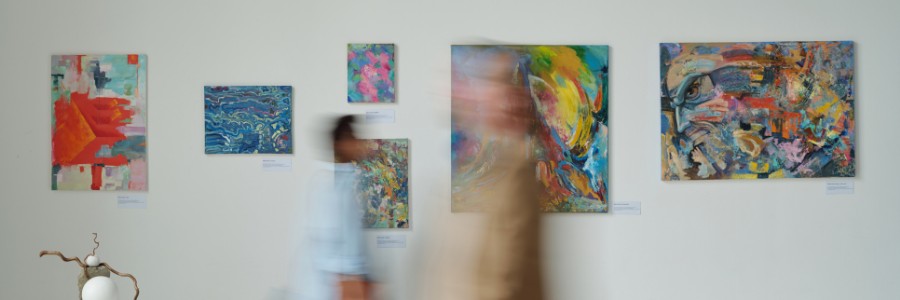
The global art market is undergoing a quiet, deliberate shift. The data from major platforms and advisory firms points to a profound change in what people choose to live with, especially as the global wall art market is projected to reach $119 billion by 2032. The era of algorithmically optimized, smooth, digital imagery is hitting a wall. Collectors are experiencing aesthetic fatigue from hyper-polished visuals, AI generation, and mass-produced content.
While the digital art market is projected to grow in the five years and blockchain technology can verify ownership, many people are feeling a distinct digital fatigue. Even as digital tools are expanding how audiences experience art and artists are merging photography with AI-generated imagery, AI-generated art is reshaping artistic production and ownership in ways that make people crave the tangible.
One of the most notable shifts in the market is the rapid rise of naïve art and raw painting styles. Loose lines, unconventional proportions, and deliberately unrefined marks are no longer seen as a lack of skill. Naïve painting emphasizes instinct and immediacy over polish, featuring visible handwork and transparent processes. Thoughtful buyers value these qualities as an intentional rejection of digital perfection. Collectors are responding to the honesty of naïve painting, and this trend is gaining institutional interest and market demand. Artists like Robert Nava exemplify the naïve painting trend, showing how raw aesthetics can capture a powerful sense of wonder.
This trend values absolute transparency of process. You see exactly how the paint met the surface, and you feel the raw instinct of the creator behind it. Software cannot replicate this immediacy, making authentic, handmade works highly sought after by collectors who treat artwork as a record of human passion and labor. Recent art trends shift towards raw, handmade authenticity, transforming the canvas into a focal point of genuine creativity.
Rough canvases, physical tears, visible collage elements, and material disruption are also now returning to the forefront. Artists are integrating gold leaf, textured fabrics, and sculptural wall art to create dynamic layers that transform an entire room. Collectors seek palpable textures and materiality in art, gravitating toward mixed media works that offer a powerful sensory experience. This craving for texture explains the renewed interest in complex, non-traditional mediums.
Sustainability is a central driver in contemporary art practices. Artists are rethinking materials and production methods for eco-conscious art, ensuring that energy consumption and environmental impact are part of the dialogue. Sustainable practices in art include using eco-friendly materials and repurposing everyday objects. Adela Gómez Cadavid uses discarded materials in her eco-art compositions, while Spencer Frazer’s work examines humanity’s relationship with nature, prompting deep reflection on climate change.
Artists in underrepresented regions frequently construct masterpieces using handmade tools, salvaged surfaces, and recycled textiles. What began as a resourceful response to a lack of conventional studio supplies is now recognized as material innovation. Unlike looking at a flat picture online, the rich textures of these surfaces encourage people to see them in person, to notice the play of shadows, and to appreciate the real-life craftsmanship.
Portraiture is shifting away from literal likeness and moving toward psychological exploration. Instead of painting flawless, idealized subjects, contemporary creators are distorting the human form to reflect the subject’s inner emotional state. Contemporary art often explores internal psychological depth, and artists prioritize emotional depth and personal narratives in their work. This focus mirrors the complex cultural and psychological pressures of living in a hyper-connected world. Artists use dreamlike masks, fragmented facial features, and shifted anatomy in their portraits to explore themes of resilience, displacement, and evolving personal histories.
Artists build highly personal mythologies in their work, using complex symbolism to explore identity and cultural hybridity. For example, Sarah Shinhyo Kim’s work uses eggs to symbolize vulnerability, while James Nazz transforms eggshells into symbols of resilience and connection.
Conscious collectors are drawn to these pieces because they offer an honest look at identity. The works feel deeply authentic precisely because they refuse to hide behind a flattering filter, encouraging cultural dialogue and self-exploration.
The geography of the art world is expanding far beyond its traditional borders. For decades, a tiny handful of Western cities dictated who achieved visibility and financial success. That centralization is breaking down as leading voices look outward to emerging cultural centers across East Asia, Southeast Asia, Africa, and the Arab world. At the same time, new financial trends like fractional ownership, where multiple people can invest in a single piece of art, are changing the market and allowing more people to participate.
There is a surge in institutional interest in underrepresented demographics in art. Art advisors point out that institutional programming and primary market activity are shifting toward underrepresented talent, with global art market gatekeepers gaining traction in new territories. Collectors are looking at cities like Manila, Bangkok, Nairobi, and Lagos to discover fresh creative energy and colorful expressions of local life. Museums are increasingly operating as civic spaces for audiences grappling with societal issues, drawing people in through photography, prints, and multimedia installations inspired by local history and heritage.
The most compelling art right now is being produced by individuals who developed their practices completely independent of Western institutional biases. Their portfolios carry a distinct style shaped by local traditions, ancestral storytelling, and lived experiences that have been historical blind spots for mainstream galleries.
Collecting with intent requires looking beyond brief decorative fads or shallow nostalgia. True value lies in acquiring works that capture a specific cultural moment, challenge your perspective, and possess an undeniable human soul. The current trends point away from cold production and toward pieces that make a bold statement on your wall.
The way people buy art is also changing. Direct-to-collector sales are rising as artists sell via digital channels, and galleries are expanding their online footprint and virtual viewings to meet the growing demand. This makes it easier than ever to establish a direct emotional connection with creators worldwide.
Investing in independent global creators allows you to redirect capital where it has a direct, transformative impact. A single purchase can sustain an independent studio, validate a distinct cultural voice, and help dismantle the geographic barriers that have kept brilliant minds invisible for too long. The most rewarding portfolios will belong to those who had the vision to look where the traditional gatekeepers were not watching.
Explore the curated collection at Borderless Canvas today to discover original, timeless works from emerging global artists who are actively redefining the contemporary art conversation.